


Increased efficiency and competitiveness
Cost savings in manufacturing
Lia Keuters
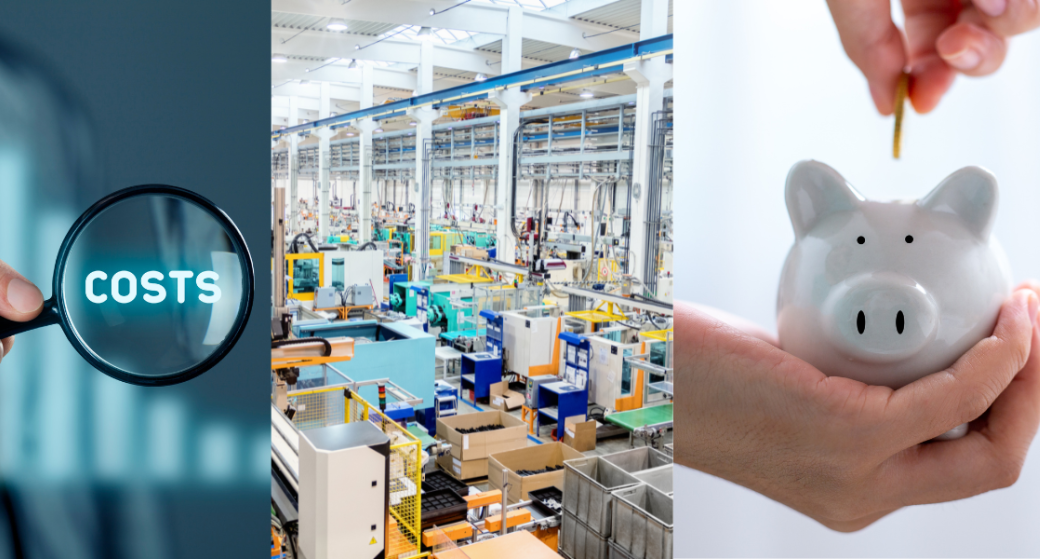
In an economy that is becoming increasingly globalised and characterised by competition, companies are constantly on the lookout for ways to reduce their production costs whilst at the same time improving quality and efficiency. The manufacturing industry, in particular, is a key focus here, as even minor savings can have a significant impact on a company’s profit margins and competitiveness. tetys also offers valuable solutions and approaches to improve efficiency and sustainability in manufacturing. In this article, we look at some methods for reducing production costs that both cut operating expenses and incorporate more sustainable processes.
Automation as the key to improving efficiency
A key factor in reducing production costs is the automation of processes. Industrial robots and artificial intelligence (AI) play a crucial role in this regard. Repetitive or complex tasks are carried out by industrial robots with a high degree of precision, thereby reducing human error. Not only do these technologies boost productivity – they also reduce labour costs in the long term.
Furthermore, AI-based systems enable production data to be analysed in real time, facilitating well-informed decision-making. This includes, for example, optimising machine uptime, predicting maintenance requirements and reducing scrap rates. Companies that make data-driven decisions in this way can significantly improve their efficiency and reduce costs.
Process optimisation through ERP systems
Enterprise Resource Planning (ERP) systems are effective tools for managing and improving manufacturing processes. They enable the seamless integration of production planning, materials management and logistics. An improved production plan reduces downtime and prevents unnecessary costs arising from inefficient processes. Furthermore, ERP systems are able to identify bottlenecks and reallocate resources accordingly, leading to improved productivity and a more efficient cost structure.
Lean Manufacturing: Minimising waste
Another approach to reducing costs is lean manufacturing. The aim of this concept is to eliminate waste as far as possible in all production processes. Waste can take various forms, such as unnecessary movements, waiting times or excessive stock levels. By implementing lean principles, companies can significantly reduce their production costs, shorten delivery times and improve overall quality.
A key component of lean manufacturing is avoiding overproduction, as this leads to unnecessary material consumption and waste. There are various lean principles. Through the use of, for example, computer-aided design (CAD) systems, production processes can be precisely planned and simulated in advance. This optimises the use of resources and reduces material wastage. Another principle is the flow principle, which ensures a steady and continuous production flow, thereby reducing waiting times and potential interruptions.
Recycling of production waste
Recycling not only protects the environment, but is also an effective way of cutting costs. The issue is not only ever-present in everyday life, but also within manufacturing companies. Production residues such as metal shavings or plastic waste can be collected, processed and reintroduced into the production process. This saves on disposal costs and reduces material costs. Companies that consistently prioritise recycling have the opportunity to significantly reduce their production costs whilst contributing to sustainability.
Energy efficiency through innovative technologies
Energy efficiency is an area where savings can often be made in manufacturing, but which is not given sufficient recognition. The latest generation of machinery consumes up to 30 per cent less energy than older models. It can therefore be worthwhile in the long term to regularly upgrade your machinery.
Furthermore, modern energy management systems help to monitor and optimise energy flows. These systems identify inefficient processes and recommend measures to reduce energy consumption. Switching to energy-efficient lighting, such as LEDs, is also a sensible investment. This enables companies to reduce their energy costs for lighting by up to 70 per cent.
Reduction in error and scrap rates
Production errors are not only a nuisance, but also incur costs. To cut costs, it is therefore important to reduce scrap rates. This is where quality management comes into play, for example through the implementation of the Six Sigma methodology. This data-driven approach supports the systematic identification and elimination of sources of error. The results are impressive: reduced error rates, improved product quality and lower production costs. Another method is, for example, the 5 Whys method, which helps to identify defects more quickly. It involves a systematic attempt to find the root cause of the defect by asking the question ‘Why?’ five times. This method reduces the likelihood of hasty attempts at a solution or false solutions.
Material optimisation to improve efficiency
The selection of suitable materials and their effective use are also crucial to reducing costs. High-performance materials with greater durability or better processing properties can improve production processes and reduce material costs. CAD systems and other lean manufacturing methods help to plan material usage precisely in advance, thereby avoiding unnecessary waste.
Comprehensive strategy for sustainable cost reduction
In order to implement cost-reduction strategies in manufacturing, it is necessary to consider them from a holistic perspective. It is not enough to focus solely on individual measures. Instead, companies should continuously improve all their processes in order to achieve savings in both the short and long term.
Careful production planning, which takes into account all aspects such as resources, staff and machine running times, is of great importance in this regard. A combination of automation, lean manufacturing, energy savings and material optimisation provides a solid foundation for reducing costs whilst increasing productivity and quality.
Cost reduction in production through tetys
tetys can also help to reduce manufacturing costs, as we take care of the entire production planning process – from staff planning and seasonal planning right through to resource and energy savings. At tetys, we plan efficiently to minimise costs wherever possible. If you’re interested, please fill in the contact form in the top right-hand corner and we’ll get back to you as soon as possible.
Conclusion
There is considerable potential for cost reduction in manufacturing. Whether through the use of industrial robots, the automation of processes, the optimisation of material and energy consumption, or the application of lean principles – every measure helps to promote a company’s competitiveness and sustainability.
Companies that are constantly exploring new technologies and improvement strategies have the opportunity to reduce their expenditure and thrive in a challenging market environment. The key lies in taking a holistic approach and being committed to continuous improvement.
Lia Keuters
Lia has been an integral part of the tetys family since 2024 and works in marketing. Having recently completed her Bachelor’s degree in Communications, she brings a breath of fresh air and new ideas to tetys. In her spare time, she loves playing sport and enjoys chasing an orange ball – or, every now and then, running a half-marathon.