



 APS workforce
_Labour as a production factor:
Planning intelligently and securing skills.
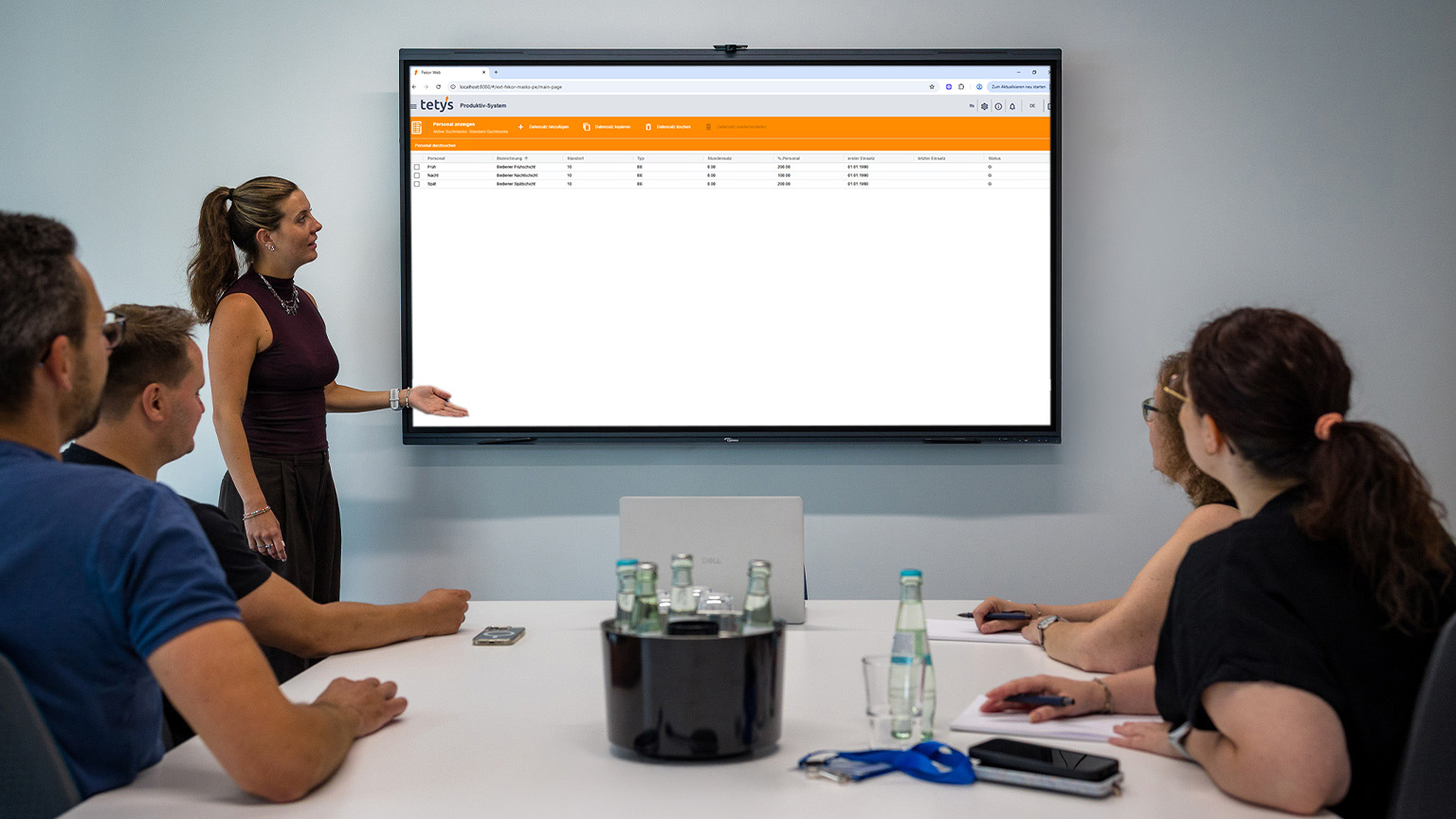
Even the most advanced machines do not (yet) run on their own. With tetys companion APS workforce, you can plan the deployment of your specialist staff to match the dynamic workload exactly – and ensure that the safety and operational expertise required for complex machinery is always available during the current shift.
_Labour as a production factor:
Planning intelligently and securing skills.
Even the most advanced machines do not (yet) run on their own. With tetys companion APS workforce, you can plan the deployment of your specialist staff to match the dynamic workload exactly – and ensure that the safety and operational expertise required for complex machinery is always available during the current shift.
_If there is no qualified operator, the plant comes to a standstill.
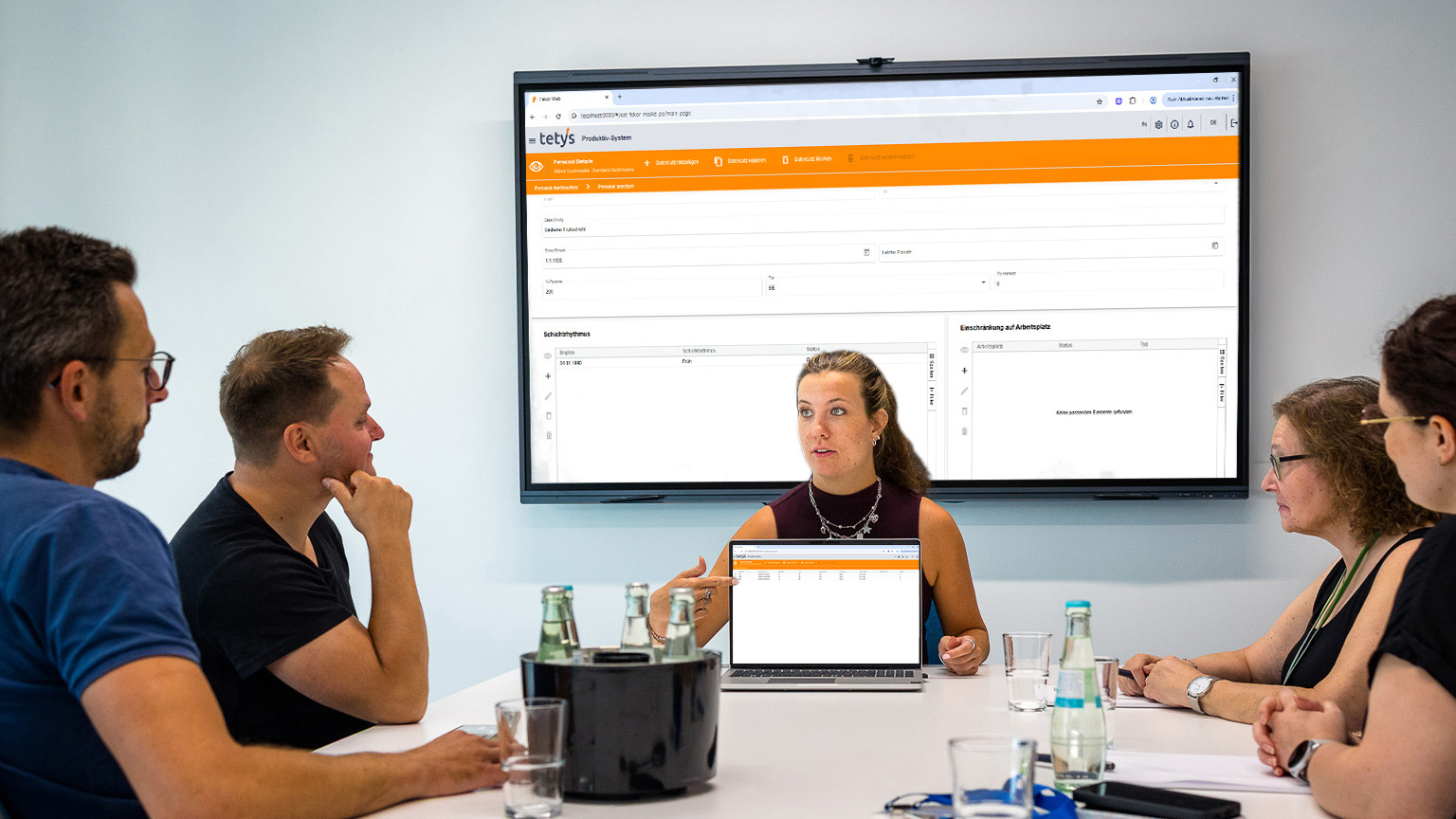
Even the most sophisticated and expensive set-up optimisation proves to be of absolutely no economic value if the only qualified set-up operator authorised to operate and approve the complex punching tool in accordance with safety regulations is absent on the precisely scheduled day due to illness or holiday. Tragically, in countless industrial companies, detailed staff deployment planning is completely decoupled from machine planning at an organisational level. The result of this silo mentality: quality defects caused by unqualified staff being deployed on the production line, overwork that puts key staff at risk of burnout, and ultimately short-term, painful production downtimes.
_If there is no qualified operator, the plant comes to a standstill.
Even the most sophisticated and expensive set-up optimisation proves to be of absolutely no economic value if the only qualified set-up operator authorised to operate and approve the complex punching tool in accordance with safety regulations is absent on the precisely scheduled day due to illness or holiday. Tragically, in countless industrial companies, detailed staff deployment planning is completely decoupled from machine planning at an organisational level. The result of this silo mentality: quality defects caused by unqualified staff being deployed on the production line, overwork that puts key staff at risk of burnout, and ultimately short-term, painful production downtimes.
_The essential symbiosis between staff planning and order planning
tetys companion APS workforce fundamentally changes this paradigm: the system establishes the certified production worker as a key, strictly limiting resource (staffing constraint) directly at the strategic forefront of the planning algorithm.
Strictly skill-based allocation
Before scheduling, the algorithm systematically checks which highly specific qualifications (forklift licence, statutory hygiene training, certified welder’s certificate) the work task objectively requires. An employee is only successfully assigned to the production line schedule if they are recorded as actually present on the shift roster with a valid, up-to-date certificate.
Automated staff shortage management
If a key skilled worker calls in sick at 6.00 am, all the jobs for which the start time has now been put on hold immediately appear in red on the dashboard. At the same time, the module internally scans the current skills matrix and, within milliseconds, provides the scheduler with a prioritised list of precisely those employees on the shop floor who possess the appropriate technical skills to act as first-line replacements.
Proactive measures to prevent critical overbookings
It is clear that a single specialist cannot carry out the start-up of two tooling set-ups simultaneously in physically separate parts of the factory. The APS system consistently prevents such critical and labour-intensive operations from overlapping within a single shift.
 Inside the Code
Skill-based scheduling
Staff planning involves determining the duration of productive phases (set-up and production) of a job. In all cases, this takes into account staff availability for scheduled shifts, subject to machine constraints.
Inside the Code
Skill-based scheduling
Staff planning involves determining the duration of productive phases (set-up and production) of a job. In all cases, this takes into account staff availability for scheduled shifts, subject to machine constraints.

_Harness the very best expertise, precisely where it’s needed, at the right plant
Take proactive steps to ensure that your otherwise smoothly running shop floor never comes to a standstill again due to unstructured staff scheduling errors.