



 APS simulation
´

_Test ‘what-if’ scenarios with confidence and plan without risk.
One wrong planning decision at the wrong time can ruin your company’s entire delivery week. With tetys companion APS simulation, you can test out revised production plans in a safe environment first, before committing to them.
_Test ‘what-if’ scenarios with confidence and plan without risk.
One wrong planning decision at the wrong time can ruin your company’s entire delivery week. With tetys companion APS simulation, you can test out revised production plans in a safe environment first, before committing to them.
_Every chain reaction starts with a small mistake…
“Can we squeeze in this lucrative urgent order from an A-tier customer before tomorrow?” – It’s a question from the sales department that every experienced planner approaches with the utmost caution. In rigid, traditional ERP systems, forcibly squeezing in prioritised rush orders is akin to a high-risk gamble. Without a reliable forecast of the massive consequences that will ensue (conflicts with maintenance, delays to standard orders, disruption to the set-up schedule), the approved rescheduling is nothing more than a risky gamble at the expense of on-time delivery.

_Every chain reaction starts with a small mistake…
“Can we squeeze in this lucrative urgent order from an A-tier customer before tomorrow?” – It’s a question from the sales department that every experienced planner approaches with the utmost caution. In rigid, traditional ERP systems, forcibly squeezing in prioritised rush orders is akin to a high-risk gamble. Without a reliable forecast of the massive consequences that will ensue (conflicts with maintenance, delays to standard orders, disruption to the set-up schedule), the approved rescheduling is nothing more than a risky gamble at the expense of on-time delivery.
_The digital sandbox for your production planning
The simulation module in tetys companion takes the enormous psychological pressure to perform out of ad hoc decisions. With a single click, you can create a parallel planning snapshot (client) that accurately replicates the real factory environment, including its live capacity utilisation, in a virtual environment.
Safe capacity testing
Set the urgent order under discussion to the highest priority (Priority 1) in the sandbox and let APS Simulation calculate the new, compressed production schedule – completely independently and without distracting the current real-time production control system.
KPI-based scenario comparison
You are comparing two extremely contrasting planning approaches directly with one another (e.g. Scenario A: ‘Maximum unit output at any cost’ vs. Scenario B: ‘Maintaining all confirmed set-up sequences and delivery dates’). Which strategy results in lower penalties or fewer failures? Whatever decision you make as a production planner, it is fact-based.
Economic forecast for the future in the event of disruptions
If a key production line is expected to be out of action for three days, use the simulator to test whether the costly two-shift operation ordered for the remaining, slower legacy systems will be sufficient to clear the delivery backlog in good time and in accordance with the contract. You know what will happen.
 Inside the Code
Professional and precise
Simulation offers the following advantage: the live system can remain unaffected when simulations need to be carried out, for example, in the area of master data. As a standalone copy of the production system, a wide variety of scenarios can be tested here to validate whether specific, plausible changes should also be implemented in the live system. The simulation ensures that the live system remains unaffected during this time, so that production is not disrupted.
Inside the Code
Professional and precise
Simulation offers the following advantage: the live system can remain unaffected when simulations need to be carried out, for example, in the area of master data. As a standalone copy of the production system, a wide variety of scenarios can be tested here to validate whether specific, plausible changes should also be implemented in the live system. The simulation ensures that the live system remains unaffected during this time, so that production is not disrupted.
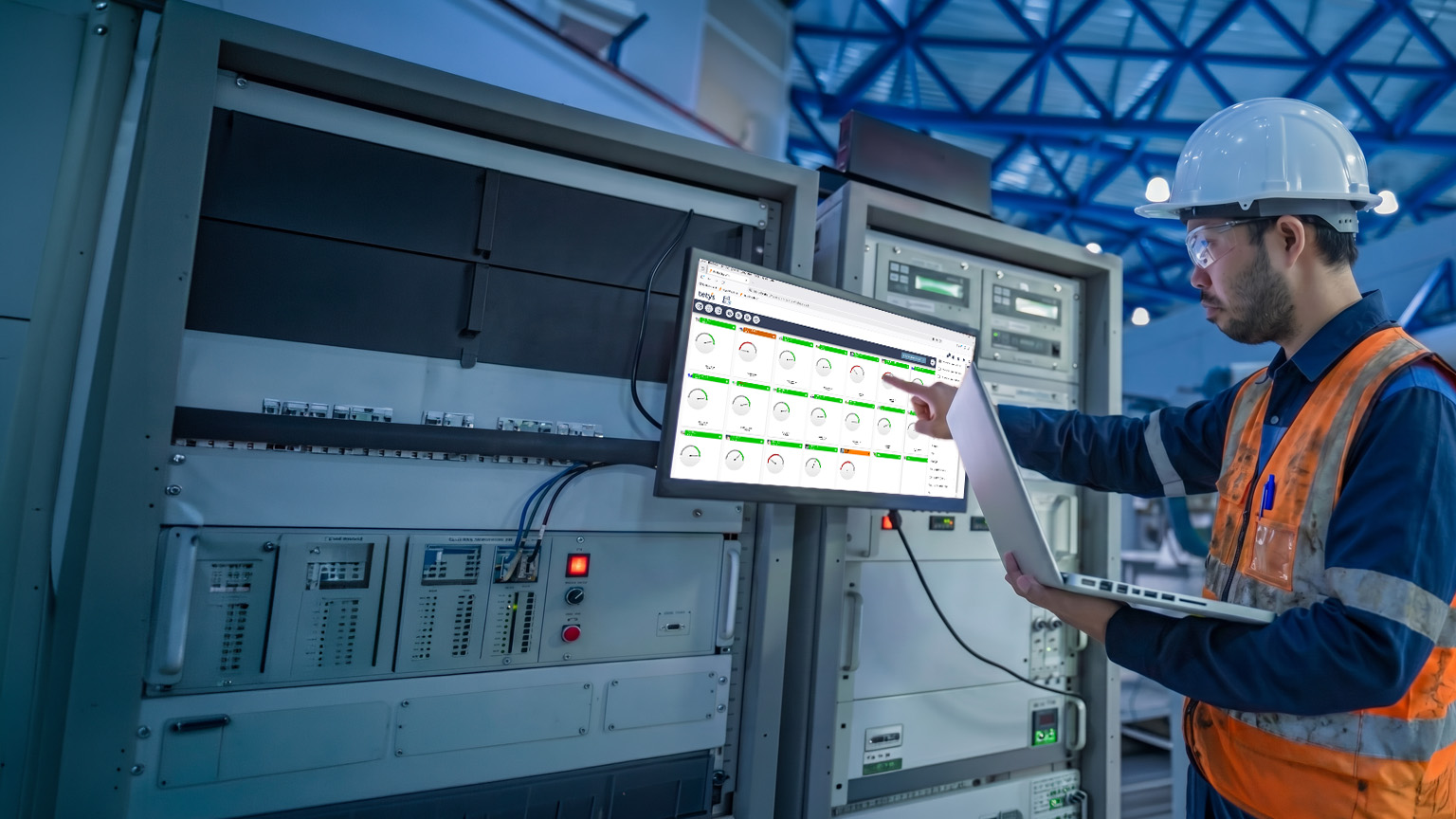
_Make your decisions solely on the basis of verifiable facts
Keep risky, off-the-cuff decisions regarding abdominal surgery to an absolute minimum.