


Increased efficiency and competitiveness
Cost savings in manufacturing
Lia Keuters
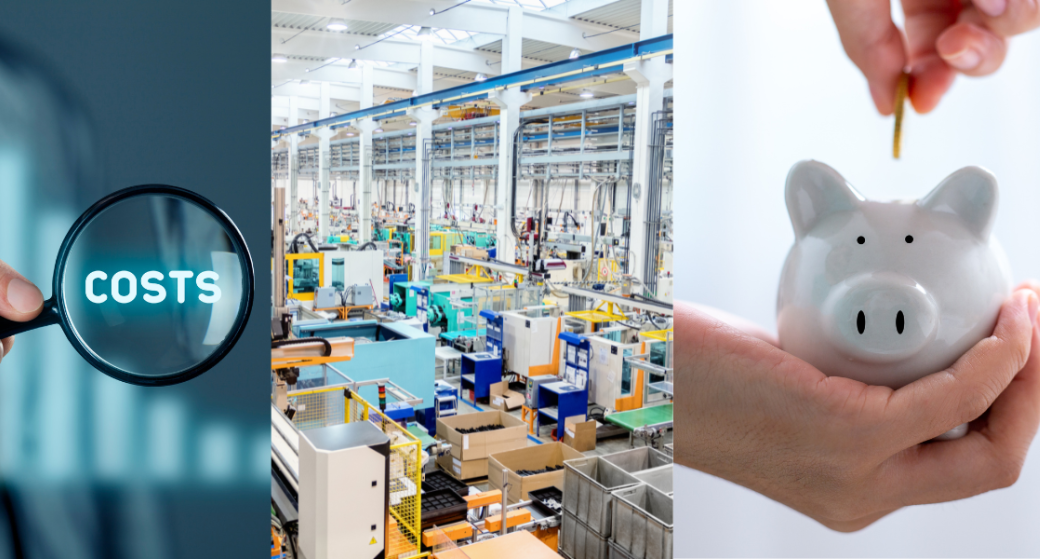
In an economy that is becoming increasingly globalised and characterised by competition, companies are constantly on the lookout for ways to reduce their production costs whilst at the same time improving quality and efficiency. The manufacturing industry, in particular, is a key focus here, as even minor savings can have a significant impact on a company’s profit margins and competitiveness. tetys also offers valuable solutions and approaches to improve efficiency and sustainability in manufacturing. In this article, we look at some methods for reducing production costs that both cut operating expenses and incorporate more sustainable processes.
Automation as the key to improving efficiency
A key factor in reducing production costs is the automation of processes. Industrial robots and artificial intelligence (AI) play a crucial role in this regard. Repetitive or complex tasks are carried out by industrial robots with a high degree of precision, thereby reducing human error. Not only do these technologies boost productivity – they also reduce labour costs in the long term.
Furthermore, AI-based systems enable production data to be analysed in real time, facilitating well-informed decision-making. This includes, for example, optimising machine uptime, predicting maintenance requirements and reducing scrap rates. Companies that make data-driven decisions in this way can significantly improve their efficiency and reduce costs.
Process optimisation through ERP systems
Enterprise Resource Planning (ERP) systems are effective tools for managing and improving manufacturing processes. They enable the seamless integration of production planning, materials management and logistics. An improved production plan reduces downtime and prevents unnecessary costs arising from inefficient processes. Furthermore, ERP systems are able to identify bottlenecks and reallocate resources accordingly, leading to improved productivity and a more efficient cost structure.
Lean Manufacturing: Minimising waste
Another approach to reducing costs is lean manufacturing. The aim of this concept is to eliminate waste as far as possible in all production processes. Waste can take various forms, such as unnecessary movements, waiting times or excessive stock levels. By implementing lean principles, companies can significantly reduce their production costs, shorten delivery times and improve overall quality.
A key component of lean manufacturing is avoiding overproduction, as this leads to unnecessary material consumption and waste. There are various lean principles. Through the use of, for example, computer-aided design (CAD) systems, production processes can be precisely planned and simulated in advance. This optimises the use of resources and reduces material wastage. Another principle is the flow principle, which ensures a steady and continuous production flow, thereby reducing waiting times and potential interruptions.
Recycling of production waste
Recycling not only protects the environment, but is also an effective way of cutting costs. The issue is not only ever-present in everyday life, but also within manufacturing companies. Production residues such as metal shavings or plastic waste can be collected, processed and reintroduced into the production process. This saves on disposal costs and reduces material costs. Companies that consistently prioritise recycling have the opportunity to significantly reduce their production costs whilst contributing to sustainability.
Energy efficiency through innovative technologies
Energy efficiency is an area where savings can often be made in manufacturing, but which is not given sufficient recognition. The latest generation of machinery consumes up to 30 per cent less energy than older models. It can therefore be worthwhile in the long term to regularly upgrade your machinery.
Furthermore, modern energy management systems help to monitor and optimise energy flows. These systems identify inefficient processes and recommend measures to reduce energy consumption. Switching to energy-efficient lighting, such as LEDs, is also a sensible investment. This enables companies to reduce their energy costs for lighting by up to 70 per cent.
Reduction in error and scrap rates
Production errors are not only a nuisance, but also incur costs. To cut costs, it is therefore important to reduce scrap rates. This is where quality management comes into play, for example through the implementation of the Six Sigma methodology. This data-driven approach supports the systematic identification and elimination of sources of error. The results are impressive: reduced error rates, improved product quality and lower production costs. Another method is, for example, the 5 Whys method, which helps to identify defects more quickly. It involves a systematic attempt to find the root cause of the defect by asking the question ‘Why?’ five times. This method reduces the likelihood of hasty attempts at a solution or false solutions.
Material optimisation to improve efficiency
The selection of suitable materials and their effective use are also crucial to reducing costs. High-performance materials with greater durability or better processing properties can improve production processes and reduce material costs. CAD systems and other lean manufacturing methods help to plan material usage precisely in advance, thereby avoiding unnecessary waste.
Comprehensive strategy for sustainable cost reduction
In order to implement cost-reduction strategies in manufacturing, it is necessary to consider them from a holistic perspective. It is not enough to focus solely on individual measures. Instead, companies should continuously improve all their processes in order to achieve savings in both the short and long term.
Careful production planning, which takes into account all aspects such as resources, staff and machine running times, is of great importance in this regard. A combination of automation, lean manufacturing, energy savings and material optimisation provides a solid foundation for reducing costs whilst increasing productivity and quality.
Cost reduction in production through tetys
tetys can also help to reduce manufacturing costs, as we take care of the entire production planning process – from staff planning and seasonal planning right through to resource and energy savings. At tetys, we plan efficiently to minimise costs wherever possible. If you’re interested, please fill in the contact form in the top right-hand corner and we’ll get back to you as soon as possible.
Conclusion
There is considerable potential for cost reduction in manufacturing. Whether through the use of industrial robots, the automation of processes, the optimisation of material and energy consumption, or the application of lean principles – every measure helps to promote a company’s competitiveness and sustainability.
Companies that are constantly exploring new technologies and improvement strategies have the opportunity to reduce their expenditure and thrive in a challenging market environment. The key lies in taking a holistic approach and being committed to continuous improvement.
Lia Keuters
Lia has been an integral part of the tetys family since 2024 and works in marketing. Having recently completed her Bachelor’s degree in Communications, she brings a breath of fresh air and new ideas to tetys. In her spare time, she loves playing sport and enjoys chasing an orange ball – or, every now and then, running a half-marathon.



Why there is no alternative to automated production planning
Away from Excel and the like
Michael Keuters’
Monday morning, 6.30 am. The chaos begins.
The production manager is sitting in front of a digital mountain of Excel spreadsheets, sipping his first coffee of the day. An employee has suddenly fallen ill, a machine has broken down, and the most important customer sent an email on Friday evening to bring forward an order at the last minute. Now everything has to be rescheduled by hand. Enjoying his coffee is the last thing on his mind.
The situation is quite different in a company that uses automated production planning. Whilst one person is still laboriously moving cells around in Excel, the system analyses the current situation in real time, suggests optimal solutions and even adjusts shift schedules automatically. If there is a shortage of materials for production, the purchasing department is notified immediately. The result is less stress, faster decision-making and greater efficiency – and the coffee definitely doesn’t go cold.
Why automated production planning is essential
Surprisingly, many manufacturing companies still rely on Excel, whiteboards or outdated systems for production planning. But if you want to remain competitive in the long term, you need a solution that keeps pace with the realities of production – ideally in real time.
If companies continue to rely on this already uneconomical and highly error-prone way of working, they will face another major problem: the shortage of skilled workers. Experienced production planners are hard to find, whilst the demands of manufacturing continue to rise. Automated solutions take the pressure off the team and ensure stable processes, even when staff shortages occur.
Furthermore, customer requirements have become increasingly dynamic in recent years. Shorter lead times, smaller batch sizes and sudden changes are now part of everyday life. Companies need to respond more quickly and flexibly than they did 10 years ago, but manual planning systems often limit their ability to do so.
Another stumbling block to efficient and sustainable production planning is Excel’s limited capabilities. Whilst it is a powerful tool, it was not designed for complex production planning. Changes have to be laboriously entered by hand, and dependencies between machines, staff and materials can hardly be mapped in real time – moreover, viewed objectively, planning with Excel becomes increasingly prone to errors as complexity rises.
The solution to all these challenges lies in intelligent and (partially) automated production planning, which analyses all relevant factors in a matter of seconds, calculates various scenarios and identifies bottlenecks at an early stage.
How to make the switch – step by step
The transition from manual to automated production planning may sound like a complex undertaking at first, but if companies take a structured approach, it becomes manageable and predictable.
The first step is to carry out a review. This involves analysing which areas of production planning are still carried out manually and where problems regularly arise. Particularly common weak points include last-minute changes, staff shortages or inefficient use of machinery. Existing systems such as ERP or MES solutions should ideally also be included in this analysis. Ideally, one or two existing processes should then be optimised following this phase.
The second step involves gradual automation. It is not necessary to convert the entire system straight away. Many companies start with individual sub-areas. Automated solutions ensure optimised machine utilisation, thereby significantly reducing set-up costs and preventing bottlenecks. Shift planning can also be optimised to reduce downtime caused by a lack of machine operators or set-up staff. Modern algorithms therefore help to ensure that machine capacity is utilised as effectively as possible, whilst taking all relevant factors into account.
Another key area is dynamic order planning. Automated systems identify bottlenecks at an early stage and suggest alternatives to avoid delays.
A modern planning tool should also integrate seamlessly into the existing system landscape. When ERP and MES systems communicate with one another, real-time data flows are generated, enabling flexible and dynamic planning.
A successful roll-out depends not only on the technology, but also on the people who work with it. Automation does not mean that people will become redundant. On the contrary: planners and dispatchers are given better tools to make informed decisions. To ensure a smooth transition, it is crucial to involve staff at an early stage and to familiarise them with the new system through targeted training, thereby fostering acceptance.
Different approaches to automated production planning
Companies wishing to automate their production planning have several options: they can either use their own planning software or opt for a flexible service-based solution.
The traditional solution involves implementing specialised production planning software such as FEKOR. The system is customised and fully integrated into the production process. The process begins with a workshop phase in which all relevant planning parameters are defined. The software is then configured and tested in accordance with the requirements. Once implementation is complete, the company has a powerful tool at its disposal with which it can optimise production planning independently.
This solution is particularly suitable for companies that wish to retain control of their own planning in-house in the long term and have trained staff who can use the software efficiently.
An alternative to this is tetys planning flex, a service that takes care of production planning on your behalf. Companies do not need to purchase software or build up in-house expertise, but can instead access an external solution on a flexible basis. Planning is carried out by experienced experts who utilise a powerful planning system and optimise processes in line with individual requirements.
This solution is particularly suitable for companies that either do not have their own planning department or are experiencing difficulties with internal production planning due to a shortage of skilled staff. By outsourcing their planning, companies save time and money, whilst at the same time benefiting from professional, automated production planning.
Conclusion: If you don’t automate, you’ll lose out
Manual planning is a thing of the past. Companies that automate their production planning save time, reduce costs and boost efficiency, which ultimately enhances their competitiveness.
The good news is that making the switch is easier than many people think. Those looking for their own software solution can integrate FEKOR, a powerful planning system, into their production processes. On the other hand, those who wish to remain flexible or do not have the capacity for their own planning department can make use of tetys planning flex, a bespoke service.
Now is the right time to address this issue. Those who set the course today will secure a decisive competitive advantage in the long term.
Michael Keuters’
The Shop Floor Doctor
Michael has been with tetys since 2020, initially as a project manager and now as managing director. He brings his passion for digitalisation and complex production processes to his day-to-day work and really enjoys tackling complex issues and finding solutions to them. He is also a passionate football fan – his heart beats for the black-and-yellow region of the Ruhr and the Beatles’ hometown – and an avid FIFA player. He hasn’t missed a single version since FIFA 96. Despite the challenges of his professional life and being a father of two, he still finds the time to prove himself on the virtual pitch.

When production planning becomes a shot in the dark
Challenges for manufacturers
Michael Keuters’
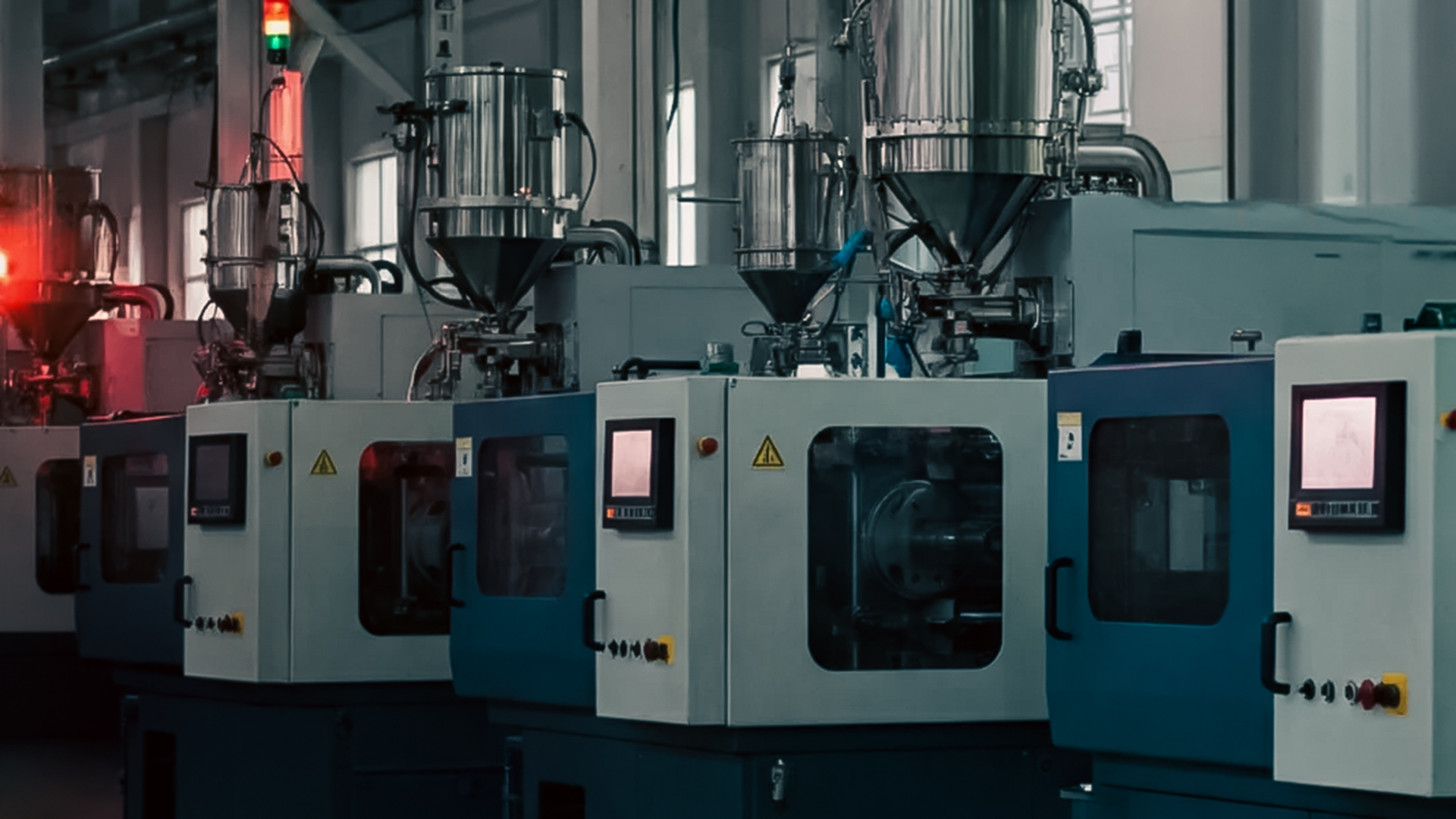
Imagine you’re sitting in the cockpit of an aeroplane – without a navigation system, autopilot or a clear plan. You’re flying by sight, improvising with every change in the weather and hoping for a safe landing. Sounds risky? That’s exactly what happens to manufacturers who neglect their production planning or rely on manual processes – and it happens all the time in industry. Let’s clear up a misconception here: this problem affects small firms just as much as large corporations.
Production planning is the heart of any company with its own manufacturing operations. It sets the pace and synchronises everything – from raw materials to the finished product. Without a robust system or when relying on manual methods, production planning quickly becomes a game of chance.
The challenges of manual production planning
In many manufacturing companies, production planning is still carried out manually. Often, Excel spreadsheets that have grown over the years are used, or handwritten plans that are updated weekly. At first glance, this method seems practical and cost-effective. However, on closer inspection, significant weaknesses become apparent. Manual planning quickly reaches its limits, particularly in modern and complex production environments. Production lines must remain flexible to keep pace with the increasing variety of products.
At the same time, customers expect shorter lead times and consistently high quality. Added to this are internal challenges such as optimising the utilisation of machinery and staff, as well as coordinating material flows.
Without digital support, it becomes difficult to reconcile these requirements. Planning errors, incorrect prioritisation or overlooked bottlenecks can have far-reaching consequences. Often, the necessary transparency is also lacking: Which machines are idle? Where are materials missing? What is the current status of production? Manual methods rarely provide reliable answers to such questions, and certainly not at the speed required today.
The consequences of planning errors
Planning errors in production quickly have an impact at several levels. A typical example is production downtime. Without forward-looking planning, it often happens that a machine comes to a standstill because a required part is missing or a tool is not available on time. Such downtime is not only frustrating, but also costs money.
Delays in the production chain also have serious consequences. A delayed production order disrupts the schedule and can result in customer orders arriving late. In the long term, this damages customer relationships and the company’s reputation. Ultimately, all production depends on customers being satisfied and placing repeat orders.
In addition to the direct consequences, planning errors also give rise to hidden costs. These include costly rework when a job has had to be completed under time pressure. The need to work extra shifts to make up for missed deadlines is also a factor. All of this puts a strain on a company’s budget and reduces its competitiveness.
The impact of the skills shortage
The shortage of skilled workers is significantly exacerbating the challenges of manual production planning. In many companies, the most experienced planners are approaching retirement. These employees often possess a deep understanding of production processes, built up over many years. When this group of people leaves the company, their knowledge is frequently lost. At the same time, finding qualified young talent to fill this gap is proving difficult. Planning requires both technical expertise and experience in dealing with the specific challenges of production. These include, for example, prioritising orders or taking machine capacities into account. This places enormous pressure on the remaining staff. They often have to take on tasks outside their remit and lack the necessary tools to do so. This not only leads to overwork but also increases the error rate. As a result, the already strained situation in planning becomes even more difficult.
The missed opportunities of digitalisation
Many companies continue to rely on manual methods, whilst others are already making the most of the opportunities and benefits offered by digitalisation. With digital planning tools, for example, all relevant data can be recorded and analysed in real time. This not only enables more precise planning, but also provides greater control over production processes. Companies that completely eschew digital solutions run the risk of falling behind. Without new planning technologies, there is often a lack of flexibility when it comes to changes and potential adjustments to material availability.
Furthermore, manual planning can stifle a company’s capacity for innovation, because if it is constantly having to react to short-term problems, its capacity to develop new business models is limited.
Conclusion: The clock is ticking
Companies that continue to manage their production planning manually – or even neglect it altogether – are putting their efficiency, competitiveness and, ultimately, their very survival at risk, as the modern world of manufacturing is far too fast-paced and complex. But there is hope: in the next instalment of this series, we’ll take a look at how modern production planning not only takes the pressure off companies but also gives them a clear competitive advantage.
Michael Keuters’
The Shop Floor Doctor
Michael has been with tetys since 2020, initially as a project manager and now as managing director. He brings his passion for digitalisation and complex production processes to his day-to-day work and really enjoys tackling complex problems and finding solutions to them. He is also a passionate football fan – his heart beats for the black-and-yellow region of the Ruhr and the Beatles’ hometown – and an avid FIFA player. He hasn’t missed a single version since FIFA 96. Despite the challenges of his professional life and being a father of two, he still finds the time to prove himself on the virtual pitch.
Skills shortages in production planning
Risk or opportunity?
Michael Keuters’
It is not a new realisation, but one that occurs to me with increasing frequency: the shortage of skilled workers is no longer a bleak future scenario, but a bitter reality. In manufacturing too – and specifically in production planning – the shortage of qualified skilled workers is becoming increasingly apparent. Without well-trained and satisfied staff, production processes become inefficient, leading to bottlenecks, delays and higher costs. But is the skills shortage really just a risk – or could it also prompt companies to explore new, innovative approaches, thereby optimising their planning and existing manufacturing processes and thus remaining competitive?
Warning: spoiler. I believe that the skills shortage presents opportunities for us on many levels. This applies both to individual companies and to Germany and Europe as business locations. But first, I’d like to briefly outline the (undoubtedly well-known) risks that the skills shortage poses, particularly for manufacturing companies.
Skills shortages – a problem with far-reaching consequences: statistics show that, as I have noted in detail, numerous vacancies remain unfilled in production planning too. The ‘war for talent’ has taken the manufacturing industry by storm. Small and medium-sized enterprises (SMEs) are particularly affected, as they often lack the resources to keep up in the competition for the best talent. But what specific risks does the skills shortage in production planning actually pose?
Risks associated with the skills shortage:
- Production bottlenecks: A shortage of planners can result in production processes running suboptimally. This causes bottlenecks which, in the worst-case scenario, can bring the entire production process to a standstill. Unplanned machine downtime, an increase in set-up operations and the associated waste of resources are common consequences.
- A decline in staff satisfaction: Flawed and short-sighted production planning, and the resulting perceived chaos on the production floor, is eroding staff satisfaction – beyond the realm of production planning itself. Staff are becoming increasingly distracted from the actual work they enjoy doing. Dissatisfied staff mean one thing above all else: actual production efficiency is falling dramatically.
- Supply chain delays: Inefficient planning inevitably leads to delays in the supply chain. Customers cannot be supplied on time, which leads to dissatisfaction and, in the worst case, the loss of key customers. In a world where ‘just-in-time’ deliveries and significantly reduced stock holding periods have become the norm in many sectors, this can have disastrous consequences.
- Cost spiral: Any error in planning usually results in additional costs – whether through overtime, the use of expensive workarounds or penalties for late deliveries. A shortage of skilled staff makes it difficult to avoid such errors and to make up for any mistakes that have been made.
- Competitiveness at risk: Companies that do not have their production processes under control risk falling behind in both national and global competition. At a time when markets are becoming increasingly competitive, this can make the difference between success and failure.
Opportunities arising from new strategies: However, the shortage of skilled workers is also forcing companies to rethink their usual strategies and explore new avenues. Two particularly promising approaches have emerged: outsourcing production planning and introducing specialised production planning software.
1. Outsourcing production planning: Outsourcing business processes is by no means a new concept, yet it has so far been little used in production planning. It offers numerous advantages, particularly at a time of skills shortages.
Advantages of outsourcing:
- Cost-effectiveness: By outsourcing production planning, companies save on the costs of recruiting and training specialist staff, as well as on investments in their own planning tools. Instead, they pay only for the planning services actually provided.
- Access to expertise: External service providers specialise in production planning and often bring with them in-depth specialist knowledge that would be difficult to build up in-house. This enables companies to benefit from tried-and-tested ‘best practices’ and innovative solutions without having to develop them themselves.
- Flexibility: Another advantage of outsourcing is flexibility. Companies can decide how much work to outsource depending on their order book. This allows them to make the best use of their resources and avoid bottlenecks in planning.
- Focus on core competencies: By outsourcing their production planning, companies can focus more on their core competencies. This takes the pressure off the in-house team, allowing it to concentrate on strategic tasks.
Risks associated with outsourcing: Of course, there are challenges too. These include reliance on external partners and the need to share sensitive data. Trust and clear contractual agreements are crucial here to ensure smooth operations. Communication must also be effective to prevent any misunderstandings.
2. Introduction of production planning software: An alternative strategy for tackling the shortage of skilled workers is the introduction of specialised production planning software (PPS) or an advanced planning system (APS). These tools are designed to make production processes more efficient and transparent.
Advantages of software solutions:
- Automation and efficiency: Production planning software automates many repetitive tasks that would otherwise have to be carried out manually. This increases efficiency and minimises planning errors.
- Transparency and control: With the right software, companies have a clear overview of their production processes at all times. They can identify bottlenecks at an early stage and take corrective action. Furthermore, key performance indicators can be monitored in real time, which improves decision-making.
- Scalability: Software solutions can be flexibly adapted to meet growing requirements. As the company grows, the software can be easily scaled up without the need to hire new planners.
- Integration: Modern production planning software can be integrated into existing systems such as MES (Manufacturing Execution Systems) or ERP (Enterprise Resource Planning). This ensures a seamless flow of data and prevents duplication of effort.
Implementation challenges: However, rolling out new software is not without its challenges. Companies must be prepared to invest in the implementation and training of their staff. Furthermore, existing processes will need to be partially adapted to the new software, which requires time and resources. Regular updates and adaptation of the software to new processes along the value chain are also necessary in order to keep pace with changing market conditions.
Conclusion: The shortage of skilled workers in production planning undoubtedly poses a major risk. However, as is so often the case – and as I mentioned at the outset – this challenge also presents opportunities for companies that are prepared to break new ground. Whether through outsourcing or the use of modern software solutions – companies today have more options than ever to optimise their production processes and position themselves for the future – in other words, a clear break from the ‘We’ve always done it this way!’ mindset. In my view, the key lies in finding the right solution for your own company and implementing it consistently.
Ultimately, it is a question of viewing the skills shortage not merely as a threat, but as a catalyst for change and innovation. With the right measures in place, the shortage of skilled workers can even become an opportunity – for example, to take one’s own production planning, and thus one’s own production, to the next level.
Michael Keuters’
The Shop Floor Doctor
Michael has been with tetys since 2020, initially as a project manager and now as managing director. He brings his passion for digitalisation and complex production processes to his day-to-day work and really enjoys tackling complex problems and finding solutions to them. He is also a passionate football fan – his heart beats for the black-and-yellow region of the Ruhr and the Beatles’ hometown – and an avid FIFA player. He hasn’t missed a single version since FIFA 96. Despite the challenges of his professional life and being a father of two, he still finds the time to prove himself on the virtual pitch.