When the production plan passes the reality check
From firefighter to strategist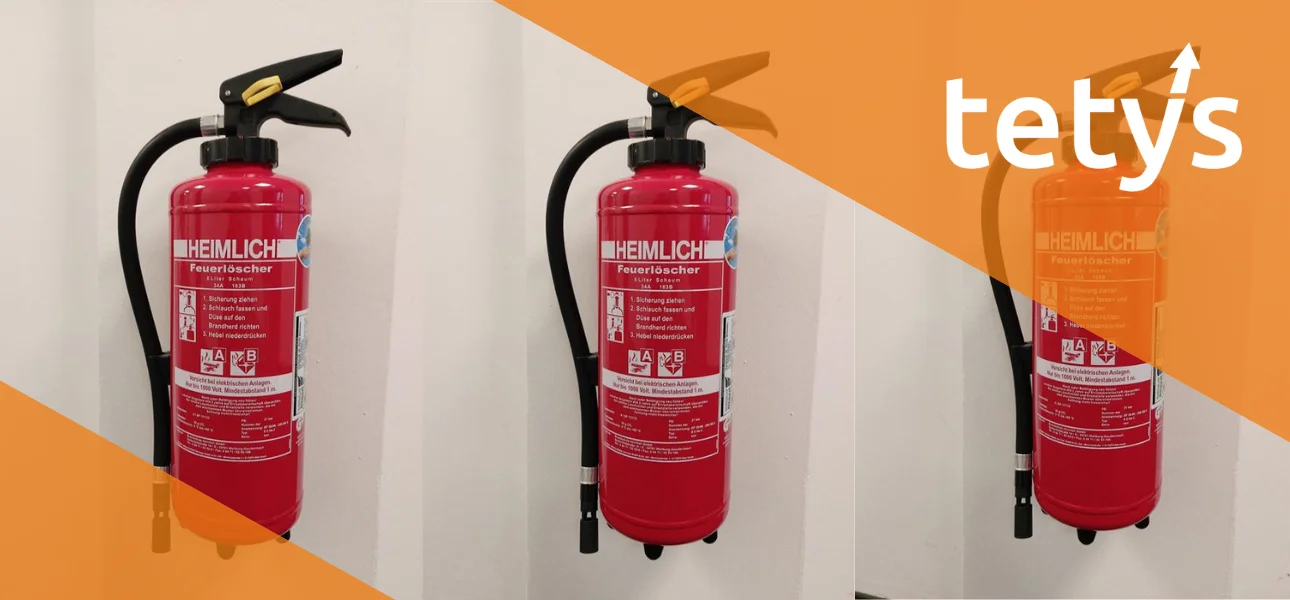
It's Monday morning, shortly after half past seven. The coffee in the cup is still steaming, and the weekly schedule glows in a reassuring green on the screen. Everything seems perfect. The orders are planned, the shifts are filled, the materials are (theoretically) booked. For a brief moment, there is a feeling of absolute control.
But then the phone rings.
On the other end is the shift supervisor from Hall 3. ‘Machine 4 is making strange noises, we have to shut it down. And by the way, the truck with the granulate for order XY is still stuck in traffic.’
Within seconds, the illusion of control crumbles. The green plan turns red. The reassuring feeling gives way to an adrenaline rush. Planner mode is switched off and ‘firefighter mode’ is activated. Now it's no longer about strategic thinking, now it's about improvisation. We move notes around on the planning board, call suppliers, negotiate with sales about delivery delays and hope that the house of cards doesn't collapse completely.
Anyone who works in production planning knows this scenario all too well. We often spend 20 per cent of our time creating plans – and 80 per cent of it throwing them out again. But do we really have to accept this in 2026?
The costly illusion of stability
For a long time, the industry motto was: ‘A good plan is a stable plan.’ People tried to squeeze reality into rigid Excel spreadsheets or ERP systems. But the world outside – and with it the world inside the factory halls – has changed.
Volatile markets, uncertain global supply chains and increasing variety with decreasing batch sizes make ‘stability’ a moving target. A plan created on Friday is often already obsolete three times over by Monday morning.
The problem here is not just the stress for the planner. The problem is the massive hidden costs incurred by this ‘firefighting’:
- Inefficient use of resources: Those who reschedule ad hoc often accept longer set-up times just to get the job done.
- Expensive overcapacity: In order to have a buffer for the unpredictable, more inventory and personnel are kept than necessary.
- Quality fluctuations: Hectic activity is the enemy of precision. Quick workarounds lead to errors more often than planned processes.
At tetys, we believe it is time for a paradigm shift. Away from trying to ignore chaos, towards the ability to manage chaos.
Adaptive planning: the navigation system for the factory
Let's compare production planning to driving a car. Some of you may still remember paper maps. If you got stuck in traffic, you were stuck – or had to pull over, fold up the map and find a new route.
Today, we use navigation systems with real-time data. If there is an accident on the motorway, the system immediately tells us: ‘Delay of 20 minutes. Alternative route via the B1 saves 15 minutes. Should I change the route?’
This is precisely the difference between classic detailed planning and adaptive planning, which we will see as standard in modern manufacturing in 2026. It is no longer just about digitalisation (the mere display of data), but about the ability to act despite disruptions.
A modern planning solution, integrated into a powerful MES, functions as this navigation system. It immediately recognises when a process is out of sync thanks to feedback from the shop floor. But it doesn't stop at the error message.
Scenarios instead of gut feelings: the ‘What if’ button
The key advantage of an integrated planning solution is simulation. Instead of making gut decisions under time pressure (‘Let's prioritise order B, it worked last time’), the software provides the planner with validated scenarios.
Let's imagine that machine 4 from the beginning of the text breaks down. The system calculates alternatives in the background at lightning speed:
- Scenario A: Reschedule to machine 2. Consequence: The delivery date is met, but we have to set up twice, resulting in additional costs.
- Scenario B: Postpone the order to the end of the week. Consequence: Set-up costs are saved, but delivery is delayed by 24 hours.
- Scenario C: Split the batch. Half is manufactured immediately on a smaller system, the rest later.
The planner is not replaced by artificial intelligence here. It empowers them. The software takes care of the complex calculations, running through the dependencies and checking material availability. The decision – i.e. the strategic assessment of what is currently more important for the customer or the company – is still made by humans. But they make it in an informed, calm and data-based manner.
Mastering the ripple effect
An often underestimated aspect of manual rescheduling is the so-called ‘ripple effect’. When we manually intervene at one point in the plan, we often overlook the consequences this will have three days later at a completely different point.
Perhaps bringing forward an urgent order solves the problem today, but it means that the day after tomorrow there will be a shortage of material on the packaging line because the lead time for the cardboard packaging was not taken into account.
A digital planning system such as FEKOR keeps an eye on the big picture. It sees the dependencies across all departments – from goods receipt to production and assembly to intralogistics. It warns of collisions that the human brain cannot even comprehend in the hectic rush of Monday morning. This creates a calmness in the system that spreads to the entire workforce.
Resilience as a competitive advantage
Why is this topic so important right now, in 2026? Because customer requirements have increased. Delivery reliability is no longer a ‘nice-to-have’, but often the decisive factor when placing orders. Those who can proactively inform their customers (‘There is a delay, but we have already implemented solution X and will deliver tomorrow at 10:00 a.m.’) come across as professional and trustworthy. Those who only call when the lorry is already standing empty in front of the ramp will lose trust in the long term.
Resilience in manufacturing therefore does not just mean that we have less stress. It means that our company becomes more resilient to crises and delivers more reliably – no matter what is happening in the world outside.
Focus on people: mental relief
Finally, here is a thought that is particularly close to our hearts at tetys: the role of the employee. The shortage of skilled workers forces us to use our resources carefully. Permanently exposing an experienced planner or master craftsman to the stress of ‘firefighting’ leads to frustration and burnout.
Good software is also a form of appreciation. It relieves employees of monotonous, nerve-wracking calculations and gives them the space to contribute their actual expertise: process knowledge, creativity and communication.
When we talk about trends in 2026, many people talk about AI, autonomous robots or the industrial metaverse. These are exciting topics. But perhaps the most important trend is the return to predictability in an unpredictable world.
Becoming a strategist rather than a firefighter is not rocket science. It just takes the courage to let go of old static plans and embrace dynamic systems. So that next Monday morning, you can enjoy your coffee warm, right down to the last sip.

 tetys GmbH & Co. KG